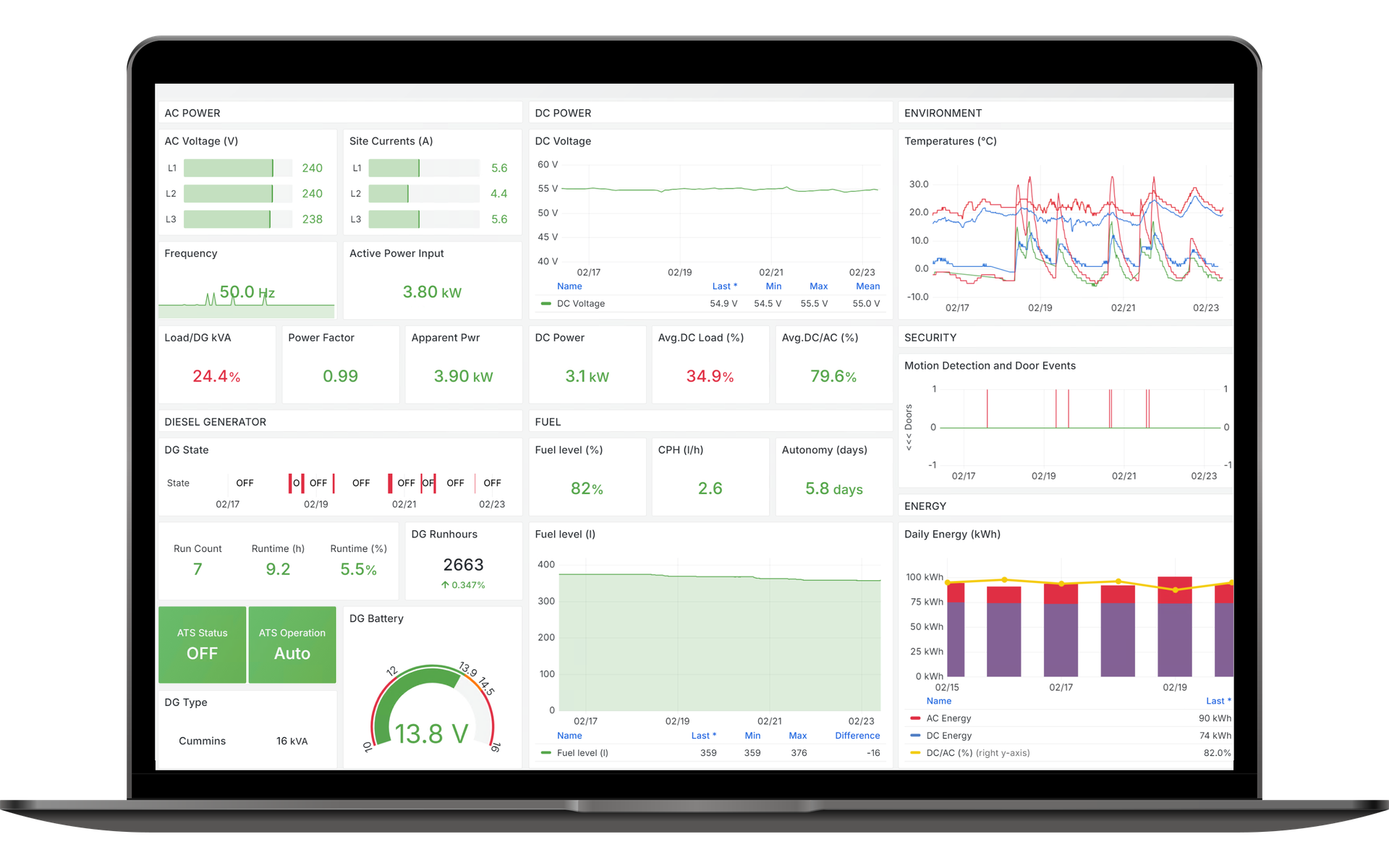
About the project
Claritech’s collaboration with a telecommunications operator on monitoring its critical infrastructure began in 2010, with the network’s data centers. The program was extended in yearly phases to the whole network of critical sites. Over 400 sites have been equipped, each with complete power and fuel monitoring, access control and video surveillance. The installed systems are integrated into the operator’s systems.
Project requirements
A critical telecommunications site comprises one or more equipment containers, a diesel generator and air-conditioning systems. It runs 24/7, without permanent staff, far from the intervention teams. The operator needed to monitor fuel consumption and any losses or theft, the operation of the battery-backed and DC power systems, and to record the generators’ running hours. Different contractors accessed the same site with physical keys, whose use was hard to track. On-site checks carried costs and gave no information about the site’s condition between visits.
For the hundreds of locations, the operations team needed centralized information. It had to support the planning of periodic refueling, the identification of the generators due for servicing, and the verification of site access before an alarm was raised.
The solution
Each site was equipped with an Asentria SiteBoss controller. It collects around 60 parameters locally, including power, fuel, door states and temperatures, with readings at 1 and 5 minutes. The data is delivered to the platform’s dashboards and, over SNMP, to the operator’s management system.
Fuel and generator
A Modbus level probe with 1% precision is mounted on every generator’s tank. The system shows the level in real time, the hourly consumption and the estimated autonomy in days, calculated from actual consumption. It generates refueling alerts and flags abnormal level variations, which can indicate losses or theft. At network level, the data is used to build the priority list for refueling and maintenance interventions, counting the running hours automatically.
The battery power system
The most important devices of the power system are the rectifier systems. Integrating multiple rectifier models and generations provides a unified view and treatment of the network, and correlates the actual energy consumption and the capacity of the rectifiers and battery strings against the running times on backup. The system follows the operating state, the charge cycles and regimes, and the temperature conditions that affect battery life, supporting the optimization of the existing fleet and the correct sizing of future investments.
Power from the grid and the generator
A three-phase smart meter measures the AC energy. The system monitors the state of the automatic transfer switch and integrates the existing rectifier systems, with around 20 parameters per system. The site’s AC and DC energy data is measured and kept in history. At many locations, two or even three meters with Modbus RTU interfaces are installed, so energy-consumption statements can be produced for sub-consumers.
Access with one-time SMS codes
Each site is equipped with a vandal-resistant RFID reader with keypad, and every door has electromagnetic locks. Authorized visitors are pre-registered in a dedicated access-control portal. The contractor receives a unique 6-digit code by SMS, with limited validity, based on the approved role and time window. Every entry and exit is logged. This system, together with online IP-camera surveillance, has significantly reduced site incidents.
From the site to the network
The data is shown in a per-site dashboard and in aggregated network dashboards. These identify the sites with operating problems and the systems performing outside the average. Statistical data is analyzed on temperatures - supporting HVAC optimization and lower consumption - on energy use and AC/DC conversion efficiency, on the battery systems - highlighting under- or over-sizing - and on the fuel consumption that departs from the designed norms.
An integrated system with IP cameras
The project includes over 700 IP cameras with local storage, which also send recordings of camera-detected events centrally. Access events are correlated with alarms and measurements and are shown in dedicated dashboards that point to the sites with suspicious activity, indicating the locations with a high number of detected events or with events of long duration. A door opening and the generator’s activity can be checked in the same system.
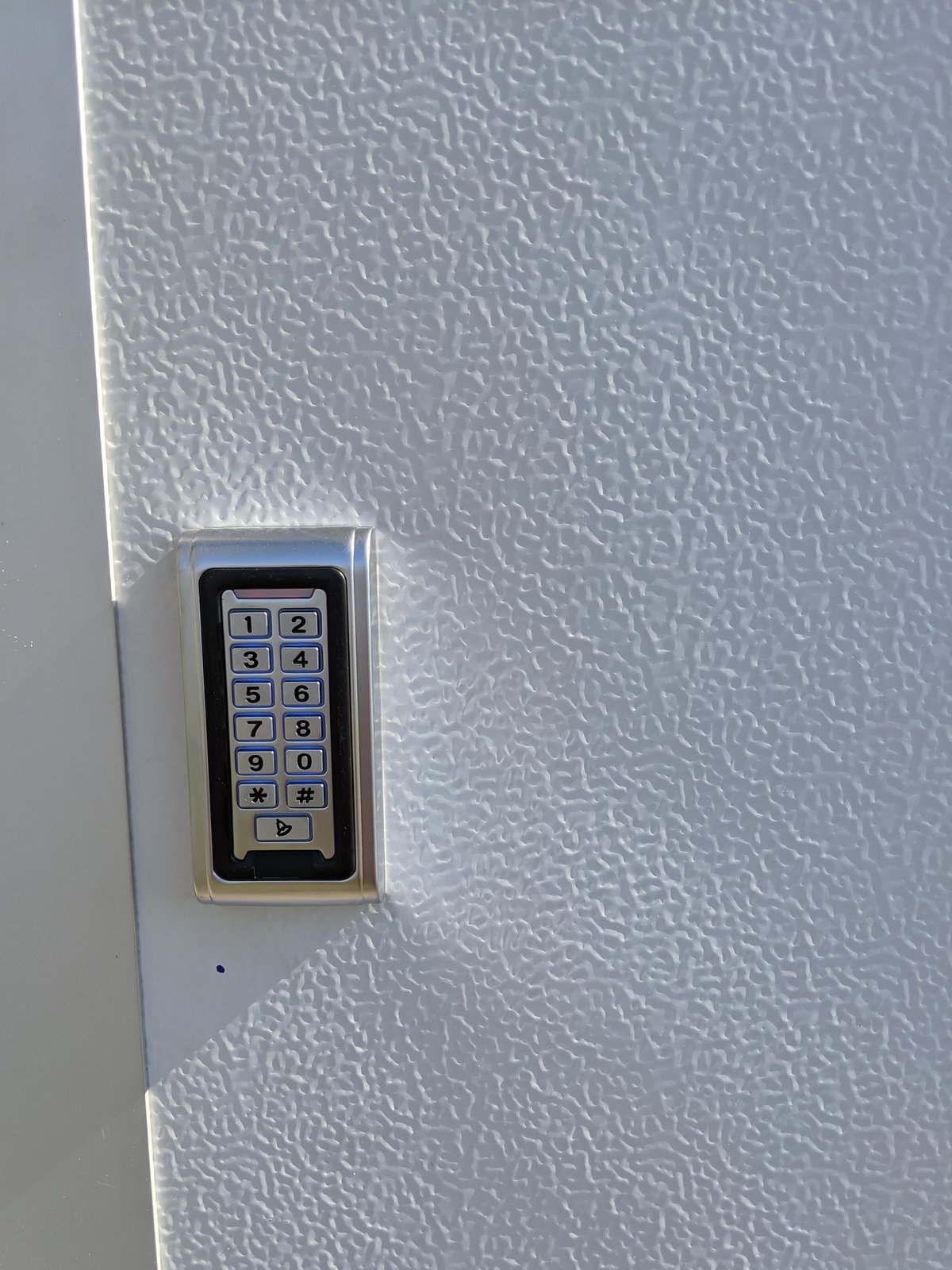
The RFID reader with keypad mounted on the shelter door. Access uses one-time codes generated by SMS, without physical keys.
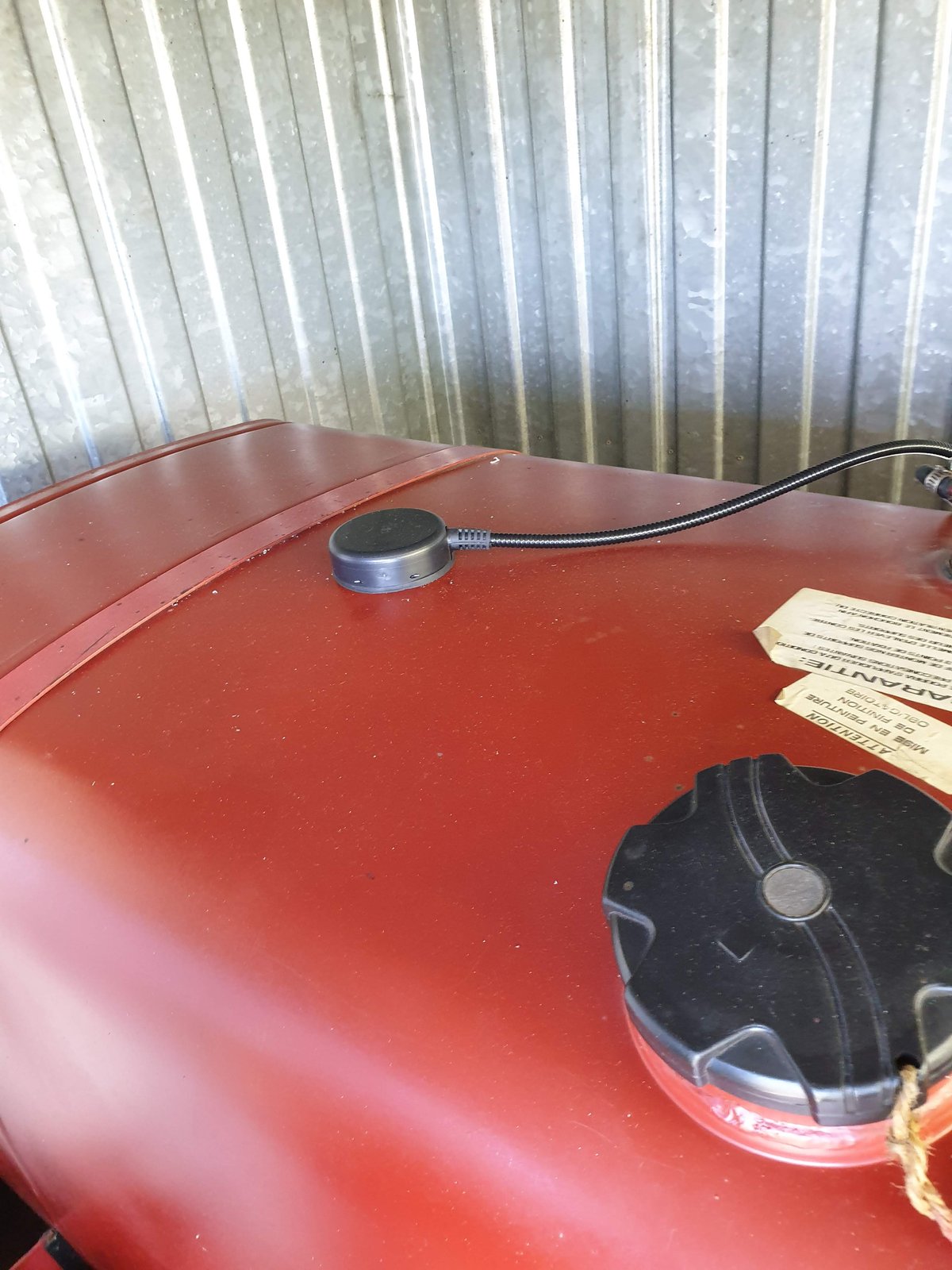
The level probe mounted on the generator’s tank. The system measures the level with 1% precision, follows hourly consumption and generates alerts on abnormal variations.
What we delivered
| Component | Details |
|---|---|
| Site controller | Asentria SiteBoss equipment with extensions, powered at -48 VDC - around 60 parameters per site, readings at 1 and 5 minutes |
| Fuel | Modbus level probe with 1% precision, the generator’s hourly consumption, estimated autonomy and refueling alerts |
| Power | Three-phase smart meter, ATS state, integration of the existing rectifier systems - around 20 parameters per system |
| Access control | Mifare RFID readers with keypad, up to three electromagnetic locks per site, one-time SMS codes, a complete log |
| Video surveillance | One to three IP cameras per site, with local storage and a PoE switch, correlated with access events |
| Software and integration | An individual dashboard per site, network dashboards, notifications directly from the unit, SNMP to the operator’s NOC |
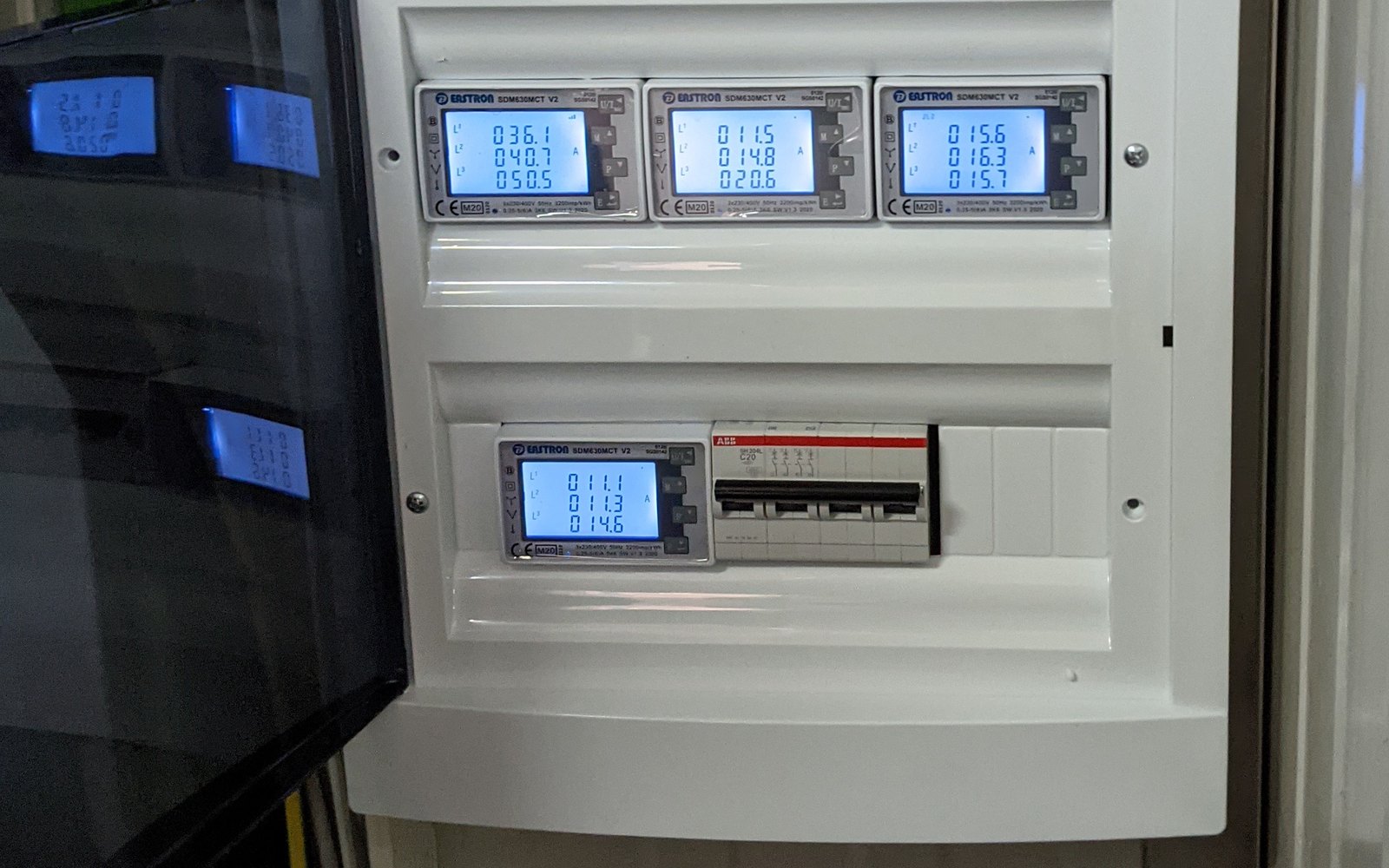
Three-phase smart meters with Modbus RTU interfaces, in the site’s existing panel. Sites with sub-consumers get two or three meters.
The results
Fuel monitoring. Every tank’s level is available in real time. Refueling is planned on the estimated autonomy. Abnormal level variations are flagged immediately.
Generator maintenance. Every generator’s running hours and starts are recorded automatically. Servicing is scheduled on the generator’s actual use.
Access logging. One-time codes with limited validity replaced physical keys. Every access is logged. Access events are correlated with the site’s alarms and the IP surveillance cameras.
Extension on the same platform. The program grew from a pilot to over 400 sites. Every yearly phase used the same standard equipment and the same dashboards. The SNMP integration into the operator’s systems has run uninterrupted since 2010.
Why Claritech
The project is part of Claritech FOCUS - the centralized monitoring platform. Through this platform we monitor over 2,000 telecom sites and over 100 data-center locations, in 8 countries. Claritech has been an Asentria partner since 2010, with a dedicated EMEA office since 2015. The SiteBoss controllers in this program are monitored in the same dashboards as the rest of the infrastructure.