About the project
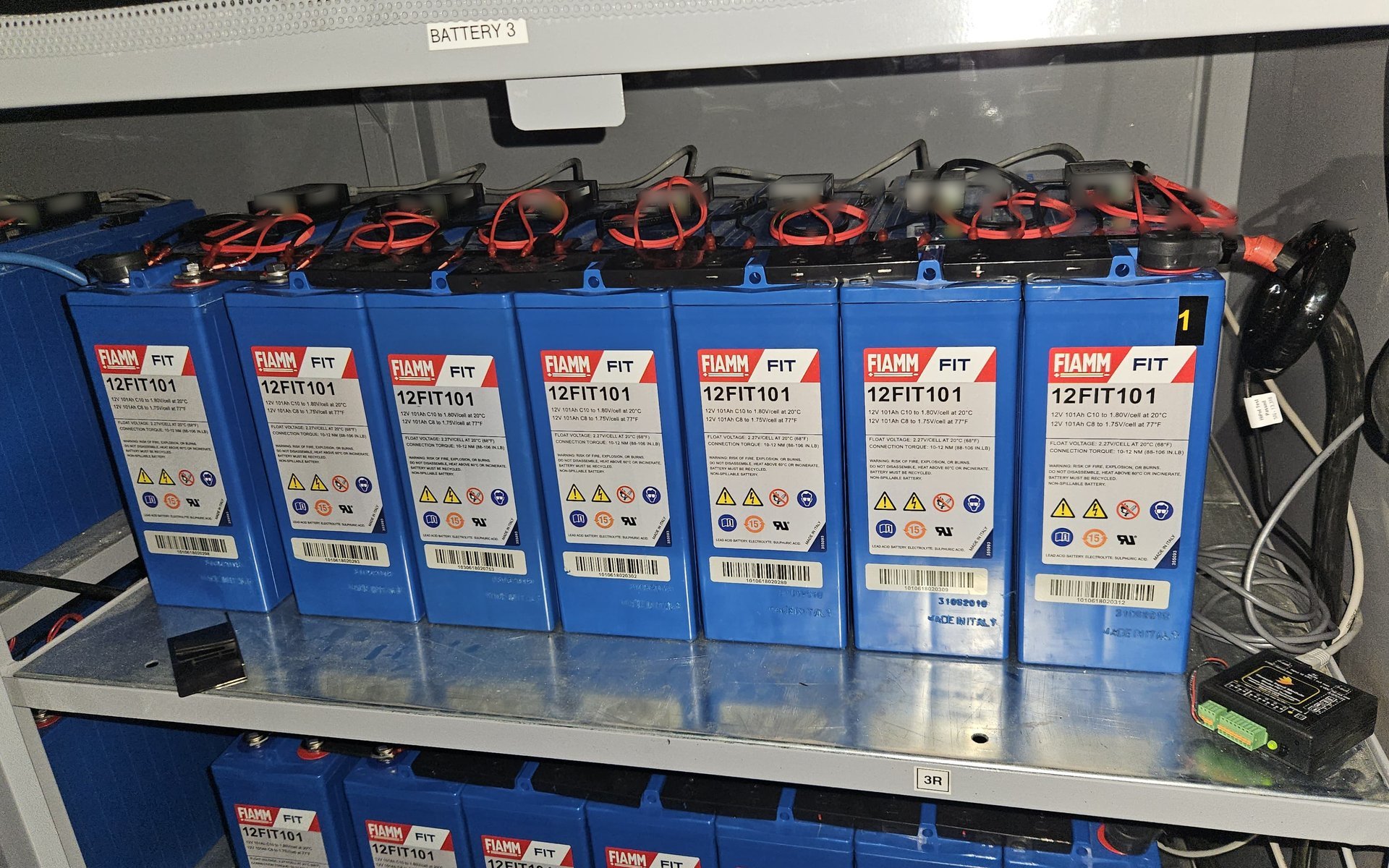
For a site with battery-based backup power systems, we installed a Phoenix Broadband Technologies (PBT) system for the individual monitoring of the battery blocks.
The system measures the parameters of every block and sends the data to the centralized Claritech FOCUS platform. Individual monitoring makes it possible to identify degraded blocks, imbalances between batteries and changes in behavior over time.
Claritech has been integrating PBT solutions in monitoring projects since 2017.
Project requirements
The condition of a battery string depends on the condition of every block in it. A degraded block can reduce the runtime available from the whole string.
Periodic manual checks only provide information at the moment of measurement. Between two checks, a block’s internal admittance, temperature or voltage can change without this being evident from measuring the string’s total voltage.
Continuous monitoring makes it possible to follow these parameters over time and to identify the batteries that need checking or replacement. Maintenance can thus be planned according to the actual condition of the batteries.
The solution
We fitted over 120 blocks of 12 V, organized in three strings, with PBT sensors mounted directly on the batteries. The system monitors both the front-terminal batteries used in telecom installations and the high-rate batteries of the UPS system.
The sensors are connected by cabling to a PBT SC4 controller. The controller centralizes the measurements and sends them over SNMP to Claritech FOCUS.
Monitoring every block
Each sensor measures the block’s voltage, internal admittance and terminal temperature. Following these values over time makes it possible to identify differences between blocks and degradation trends.
Each battery is identified individually, so an alarm can be tied directly to the block that generated it.
The current of every string
Current transducers monitor the charge and discharge current separately for each of the three strings.
The data makes it possible to compare the strings’ behavior during charge and discharge and to identify any differences between them.
The PBT SC4 controller
The SC4 controller collects the data from the sensors and current transducers and applies the configured thresholds for the monitored parameters.
The data and alarms are available through the local web interface and can be sent to external systems over SNMP.
Integration into Claritech FOCUS
The PBT data is integrated into Claritech FOCUS together with the other parameters of the monitored infrastructure.
The platform provides the current values, the history of every block and the alarms generated when the configured thresholds are exceeded. The operations team can directly identify the battery or string that needs checking and possible replacement.
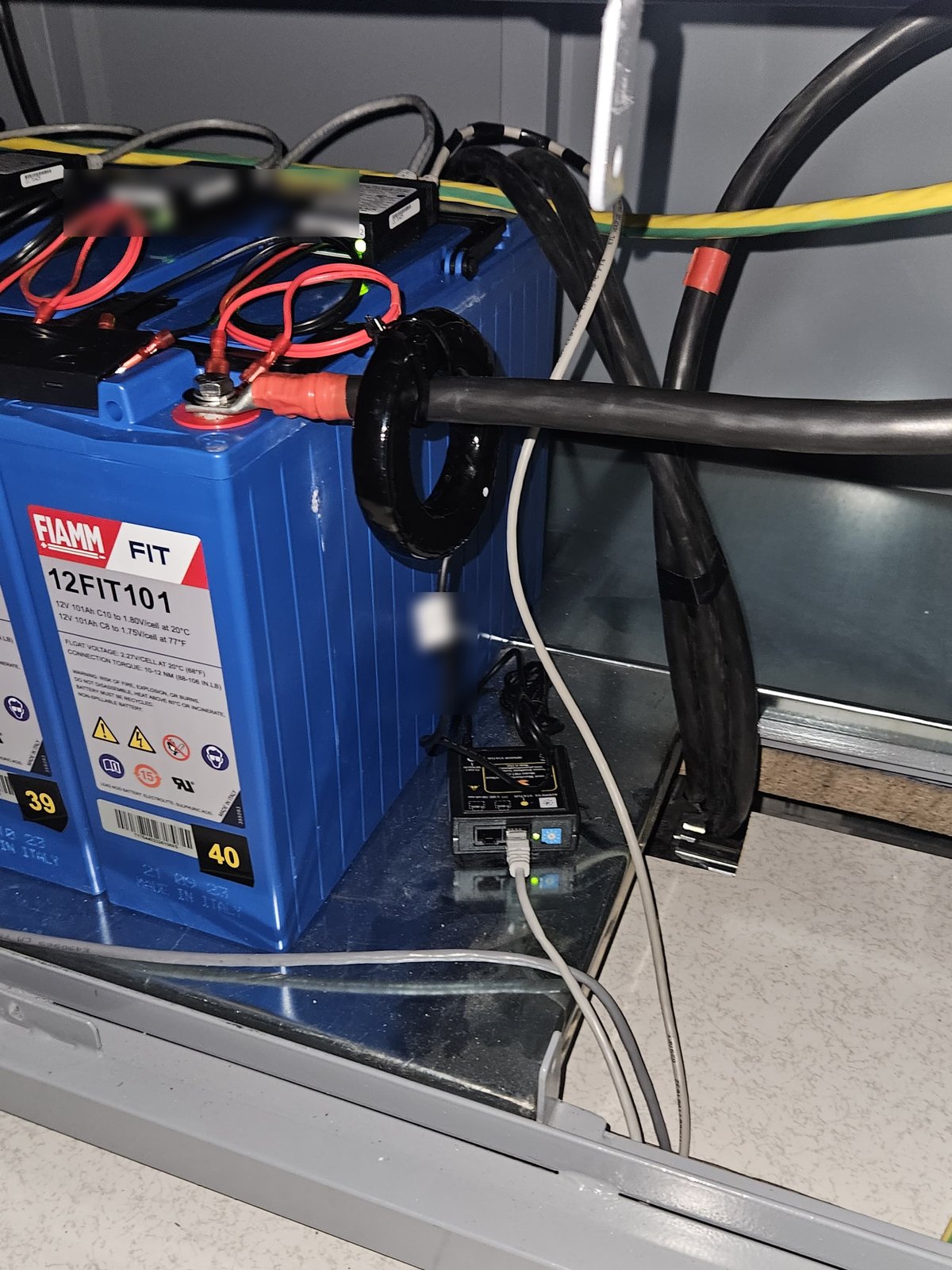
A sensor on every block and a current transducer on the string - complete measurement, with quick-disconnect fittings on the existing terminals.
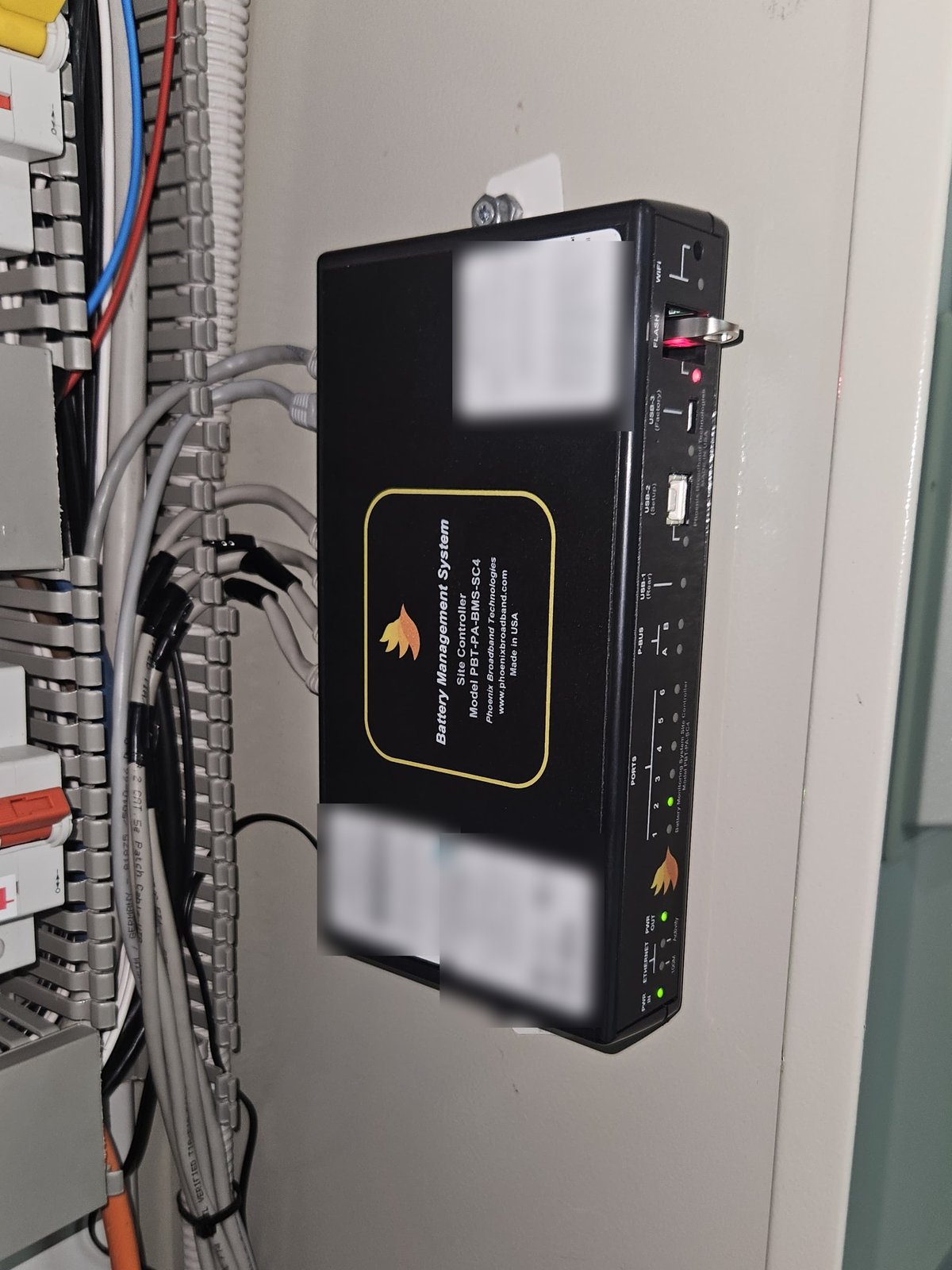
The SC4 site controller - the collection point of the whole sensor network, with a web interface and SNMP integration.
What we delivered
| Component | Details |
|---|---|
| PBT battery sensors | 121 sensors on 12 V blocks - voltage, internal admittance and terminal temperature, with quick-disconnect fittings |
| PBT SC4 site controller | Data collection from all sensors, alarm thresholds, local web interface and SNMP integration |
| String current measurement | Three systems with toroidal transducers - the charge and discharge current of every string |
| Ambient temperature | External temperature sensor and auxiliary input module, correlating room conditions with battery condition |
| Dedicated cabling | Dedicated cable kits, with tidy routes along the cabinet shelves |
| Claritech FOCUS integration | Data and alarms in the central dashboard, alongside the rest of the site’s infrastructure |
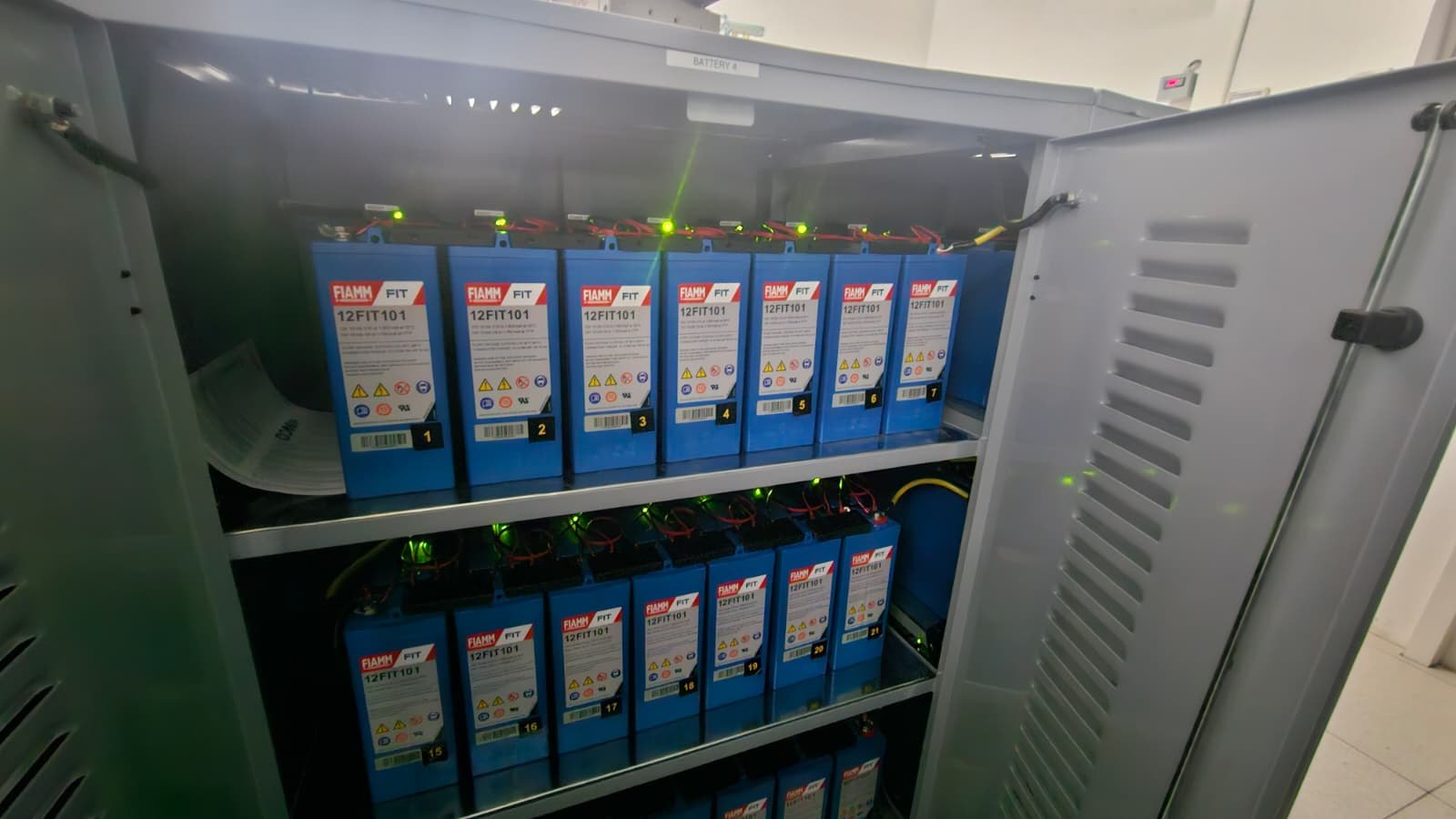
At commissioning, each sensor’s LED confirms communication - and the measured values become the reference against which aging is tracked.
The results
Block-level visibility. The bank’s condition is no longer inferred from the string’s total voltage: every battery has its own voltage, admittance and temperature measurement, with history.
Identifying degradation. Internal admittance drops as a block ages. The trend typically shows up in the data well before a failure, and replacements are planned precisely - only the worn blocks, not the whole string on a calendar.
An initial reference. The values measured at commissioning form the baseline for the battery bank’s entire service life.
Fewer routine visits. Battery condition is read remotely, from FOCUS. Site visits are kept for interventions, not for periodic measurements.
Why Claritech
The battery monitoring in this project is part of Claritech FOCUS - the centralized monitoring platform, through which we monitor over 2,000 telecom sites and over 100 data-center locations, in 8 countries. The batteries land in the same dashboard as the power, cooling and the site’s other subsystems - and our experience with PBT technology dates back to 2017.