About the project
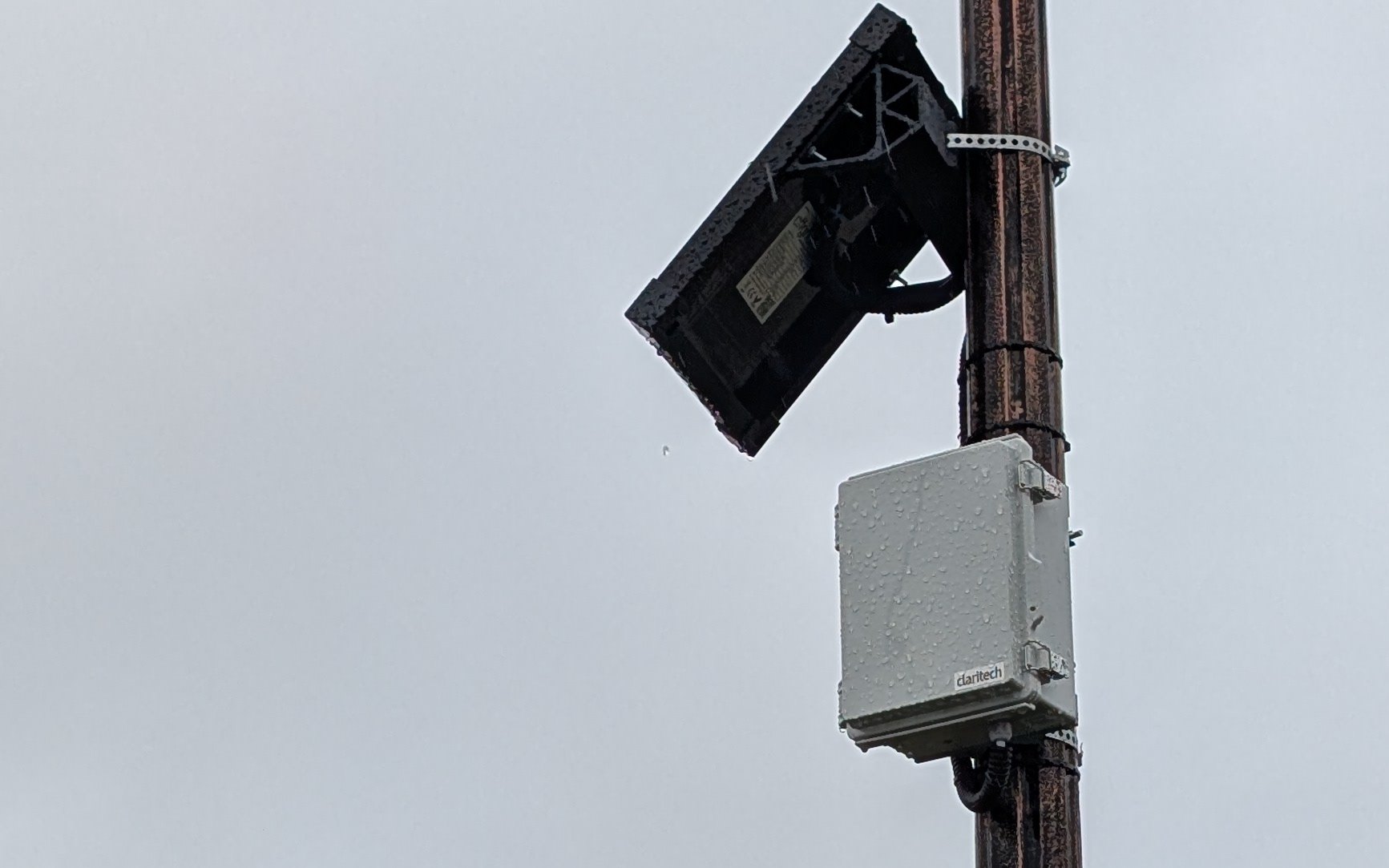
The Părinți de Cireșari association, in Bucharest’s Sector 1, initiated the “Harta Sonoră” (Sound Map) project: a network of sensors that measures neighborhood noise and shows it publicly, on a map, in real time. Claritech is the project’s technical partner: we designed and built the measurement stations, installed them, and operate the network and the data platform. The 10-station network was installed in November 2025.
Project requirements
For a community to be able to ask for action, it needs data: not just “how loud on average”, but when, where and what kind of noise - a continuous traffic hum or short-duration peaks. An important requirement was for the stations to run autonomously, powered by solar panels.
Project type
An urban noise monitoring network, delivered turnkey: measurement stations, a data platform and a public map.
Location
10 sites in Bucharest’s Sector 1 - from quiet residential streets to boulevards with continuous traffic.
Measured parameters
Equivalent level LAeq (per second, per 15 minutes and hourly), the statistical percentiles L10, L50, L90 and the LAFmax / LAFmin extremes - all in dB(A).
The solution
Self-contained stations, on existing poles
Each station is a compact enclosure with a sound-level measurement module, local processing, a solar panel and a battery - mounted on the lighting pole, with no mains connection. Battery health is reported continuously, alongside the measurement data.
Calibrated acoustic measurement
Levels are measured with A-weighting, through continuous sampling. Each station is calibrated with an acoustic calibrator at 94 dB / 1 kHz, and re-checked periodically - a typical accuracy of ±1.5-2.5 dB at the reference, documented.
Metrics that explain the noise
Beyond the LAeq average, the stations compute the L10, L50 and L90 percentiles and the LAFmax/LAFmin extremes for every interval. The gap between L10 and L90 separates a continuous traffic hum from a quiet area disturbed by short, loud noise episodes.
A public sound map
The data flows into the central platform and onto the public sound map of the Părinți de Cireșari association, where every station shows its current level on an easy-to-read scale: below 50 dB quiet, 50-69 moderate, 70-84 noisy, above 85 extreme.
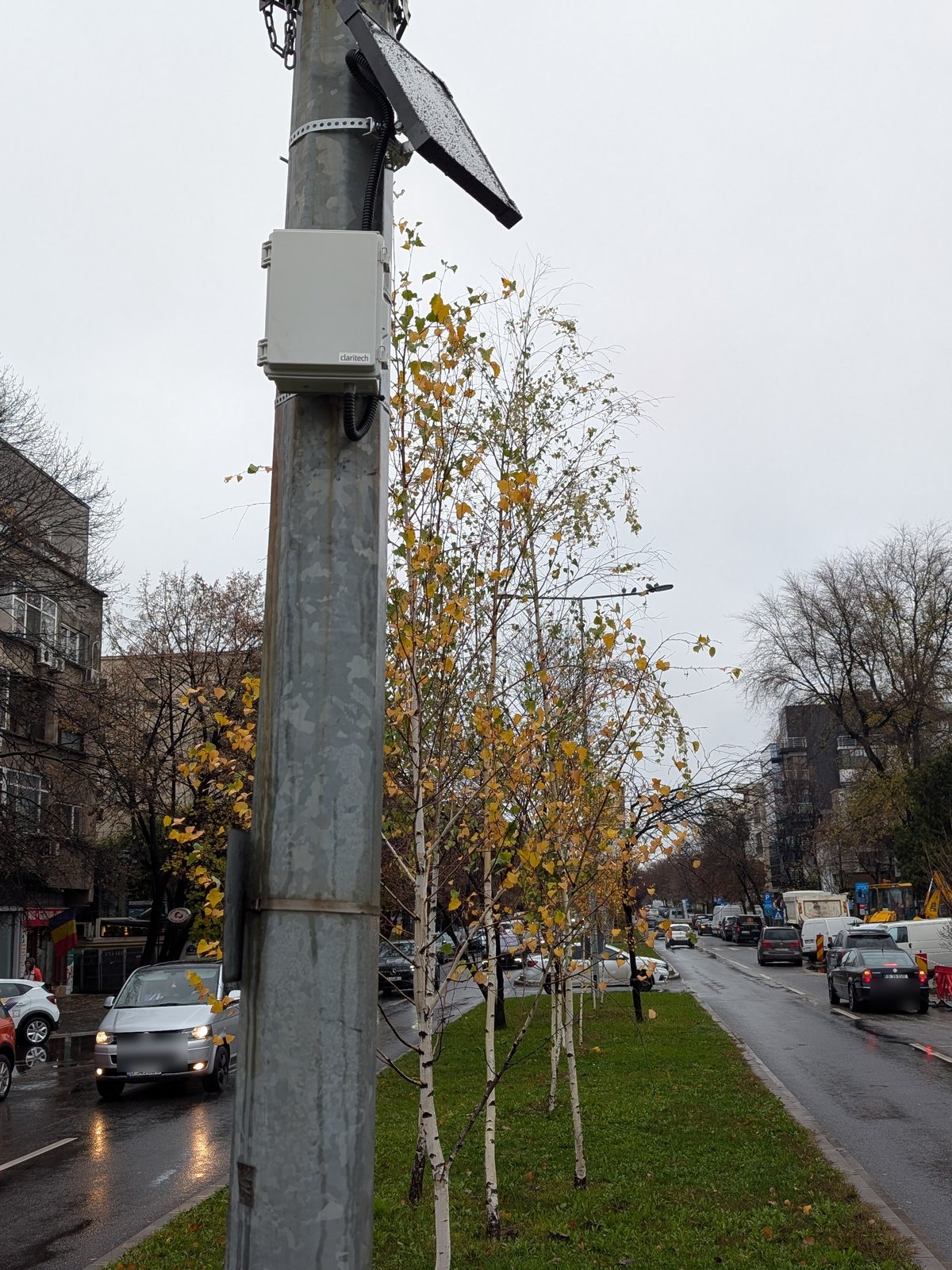
A station mounted between the boulevard’s carriageways - solar powered, with no power or data cabling.
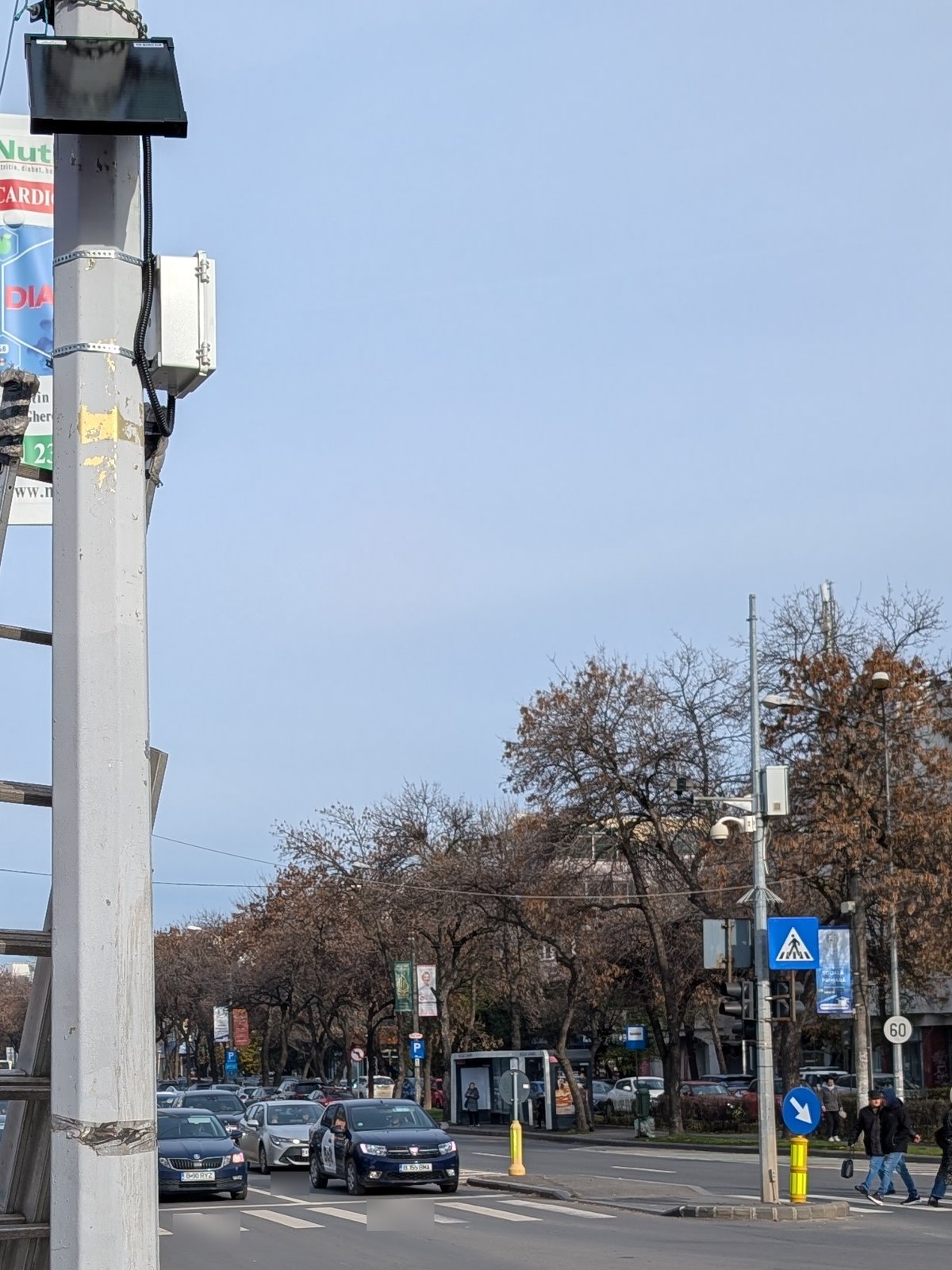
A station at a busy intersection - traffic noise, measured at the source.
What we delivered
| Component | Details |
|---|---|
| Stations | 10 stations mounted on lighting poles across Sector 1 |
| Power | Solar panel and battery, with the state of charge monitored remotely |
| Parameters | LAeq (1 s / 15 min / hourly), L10, L50, L90, LAFmax, LAFmin - dB(A) |
| Calibration | Acoustic calibrator at 94 dB / 1 kHz, re-checked periodically |
| Platform | Centralized collection, data analysis and a public sound map |
| Methodology | A methodology and analysis document, handed over with the network |
What the first data shows
The analysis of a statistically significant interval, across all 10 stations, already outlines the sound profile of the monitored areas. Hourly LAeq levels ranged from about 55 dB(A) in the quietest hours to nearly 100 dB(A) in the loudest one. Some boulevard sites stay at 78-85 dB(A) even at night, with an L90 background that never drops below the mid-50s - practically continuous noise. Residential areas, by contrast, see the night background fall to 36-37 dB(A), and 30 dB gaps between L10 and L90 reveal quiet that is broken by short events: loud pass-bys, horns, sirens - with LAFmax peaks of 105-110 dB(A).
The statistical data matters: a high continuous background calls for traffic or road-surface measures, while intermittent peaks call for identifying and addressing specific sources. As a reference point, the World Health Organization recommends an average night level below 40 dB(A) outside homes for undisturbed sleep.
The results
Noise measured in the field. Continuous data series, with standard acoustic metrics, instead of perceptions and isolated complaints.
Visible to the public. Every station appears on the public sound map, with its current level on a scale anyone can read.
Self-contained operation. Solar power, data transmission over a modem and remote management - with fast installation.
A basis for decisions. The data separates the continuous background from intermittent peaks - the starting point for the right measures, from traffic calming to addressing specific sources.
The project is presented publicly by the Părinți de Cireșari association, on the sound map page.
Why Claritech
We build environmental monitoring stations and their data platforms - from the air-quality stations installed in schools and cities to this noise network: hardware design, installation, operations and analysis, from the sensor to the public map. See the environmental monitoring & smart city solution →