About the client
A telecommunications operator with an extensive data infrastructure, part of a multinational group with operations in nearly 50 countries.
Project requirements
A development project brought the opportunity to open a new data center, to grow the network’s switching and storage capacity. The facility uses current-generation infrastructure: multiple power and back-up systems, in-row cooling, and a layout split into several physically and functionally separate pods.
Each subsystem - power, distribution, cooling, ventilation, fire detection and suppression - reported its data in its own interface, over its own protocol. The operations team had to cover its daily monitoring and control tasks using multiple applications and accessing multiple interfaces, and management had no unified data set on which to base its energy-efficiency targets.
Keeping KPIs in check
Measuring and improving indicators within standardized limits, in real time.
Early anomaly detection
Spotting deviations from normal operation before they turn into incidents.
Lower energy costs
Efficiency targets grounded in measurements, not estimates.
The solution
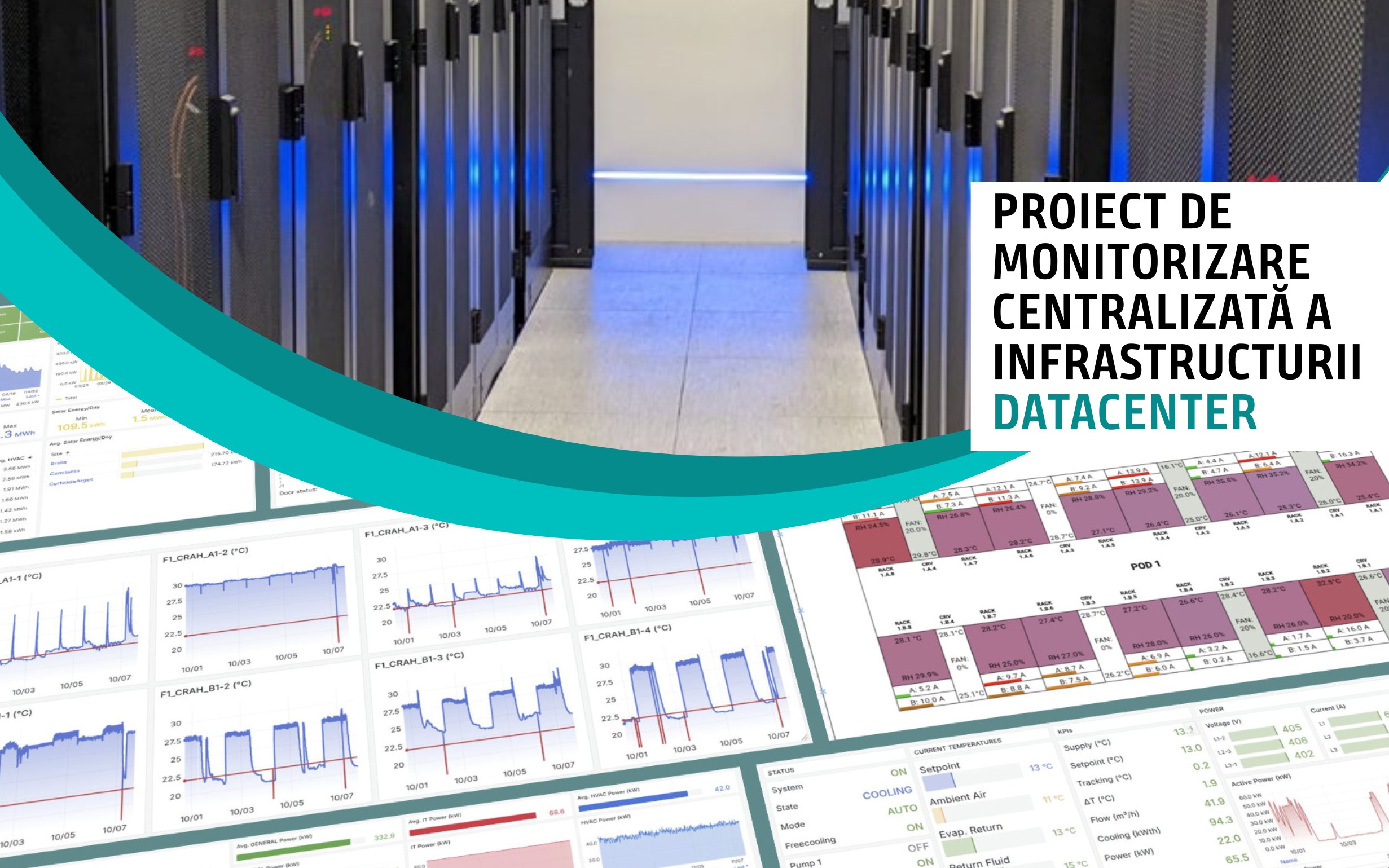
Claritech FOCUS integrates the interfaces, sensors and communication modules into a central unit that collects the events, alarms and telemetry data generated by the power and distribution equipment, the cooling and ventilation systems and the fire detection and suppression equipment.
The FOCUS advantage is the platform’s agnostic character: monitoring, metering and control for the equipment already in place, with no replacements, through SNMP, Modbus and LoRa telemetry integration.
Dashboard with 2D and 3D floor plans
Parameters are displayed in real time on the data center floor plan, alongside their history across multiple zones.
Local and remote access
A secure local interface on a touchscreen monitor in the NOC, plus browser access for teams working elsewhere.
Notifications and role-based access
Alarms sent on preset thresholds, to the right people, over the right channels.
Fast installation and integration
The system connects to what is already on site, backed by an extensive integration library.
The results
Energy efficiency. The system measures PUE (Power Usage Effectiveness) automatically and provides dashboards for identifying the sources of inefficiency, so corrective measures are effective.
Data from the sensor network makes it possible to identify hot-spots - areas of elevated temperature. These can appear because of air recirculation (wrongly oriented servers), poor sealing (cold-air loss) or equipment crowding. Remedies include blanking panels, sealing the raised floor, air-flow containment and optimized ventilation.
Operational efficiency. Each notification carries all the information needed to identify the event quickly. Correlating events and assessing the root cause of multiple alarms shortens the path to the right fix and reduces operational incidents.
Shorter repair times. Knowing the state of every piece of equipment before setting off, the intervention team arrives prepared, with better odds of fixing the fault on the first visit. Documenting root causes reduces the risk of repeating mistakes.
Optimized maintenance. Visits can be scheduled automatically, based on history and actual time under load rather than a fixed calendar. In this project, data-driven maintenance optimization was estimated to cut the associated costs by up to 25%.
Model-based decisions. The collected data is used to build an energy-consumption model of the data center, and deviations from the model are tracked and flagged for further investigation.
Conclusion
The system integrated all of the site’s infrastructure equipment and brought its alarms and measurements into a single dashboard application. Operators have a single point of control over the entire technology ecosystem, and management uses the data foundation needed to set realistic efficiency targets.
The system handles a wide range of topologies - from a single rack to complex sites with multiple enclosures, technical rooms or shelters - and can be extended with new devices at any time.